

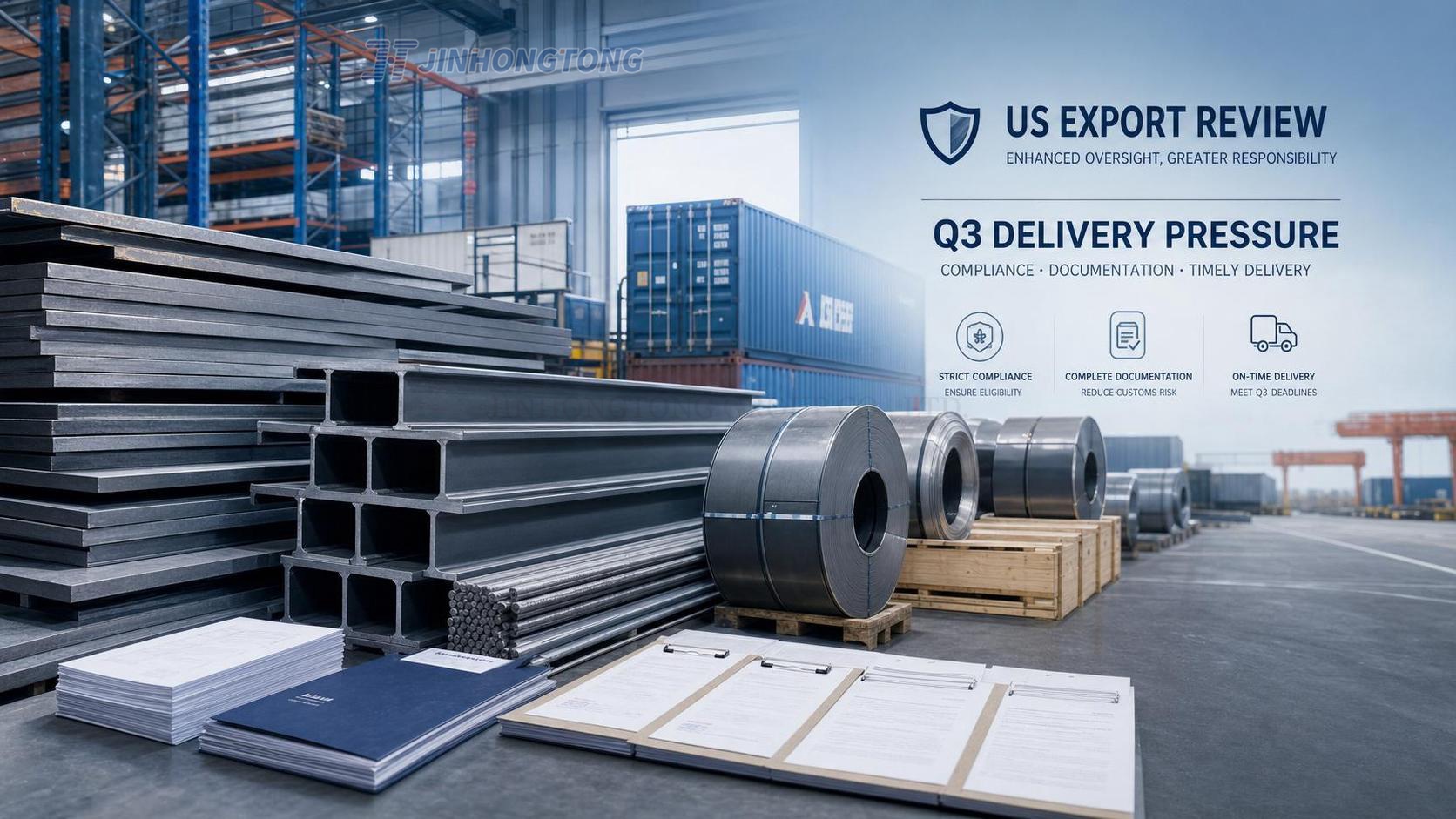
On July 3, 2026, the U.S. Department of Commerce announced an expedited sunset review of the anti-dumping duty order covering hot-rolled steel sheet from China. From August 1, importers will also need to submit an origin declaration and supporting evidence on cost composition at customs clearance. For exporters, buyers, processors, and supply-chain service providers involved in hot-rolled sections, structural steel, and downstream processed products bound for the U.S. market, this is not only a trade remedy update but also a practical compliance signal that may affect Q3 pricing, document preparation, and delivery timing.
What Has Been Confirmed So Far
The confirmed facts are limited but commercially significant. The event date is July 3, 2026, when the U.S. Department of Commerce announced the launch of an expedited sunset review related to the anti-dumping duty order on Chinese-origin HRSS. A further confirmed change is procedural: beginning August 1, importers will be required to provide an additional origin declaration and supporting materials showing cost composition during customs clearance.
The summary provided also makes clear that the review outcome will directly affect pricing strategy, document compliance, and delivery cycles for exports to the U.S. from Q3 2026 onward, including hot-rolled sections, structural steel, and downstream processed goods. Beyond these points, no further official details, outcome, or implementation interpretation has been provided in the input.
Where the Pressure Is Likely to Appear First
Export quotations may need more compliance buffering
From an industry perspective, exporters selling steel-related products into the U.S. may face the earliest pressure in quotation design rather than only at final shipment. If customs filing now requires additional origin and cost-composition support, quoted prices may need to reflect possible documentation workload, review-related uncertainty, and timing risk. The practical issue is not only tariff exposure in the abstract, but whether Q3 offers can still be made on the same assumptions used before the review was announced.
Import-side document handling becomes a more immediate control point
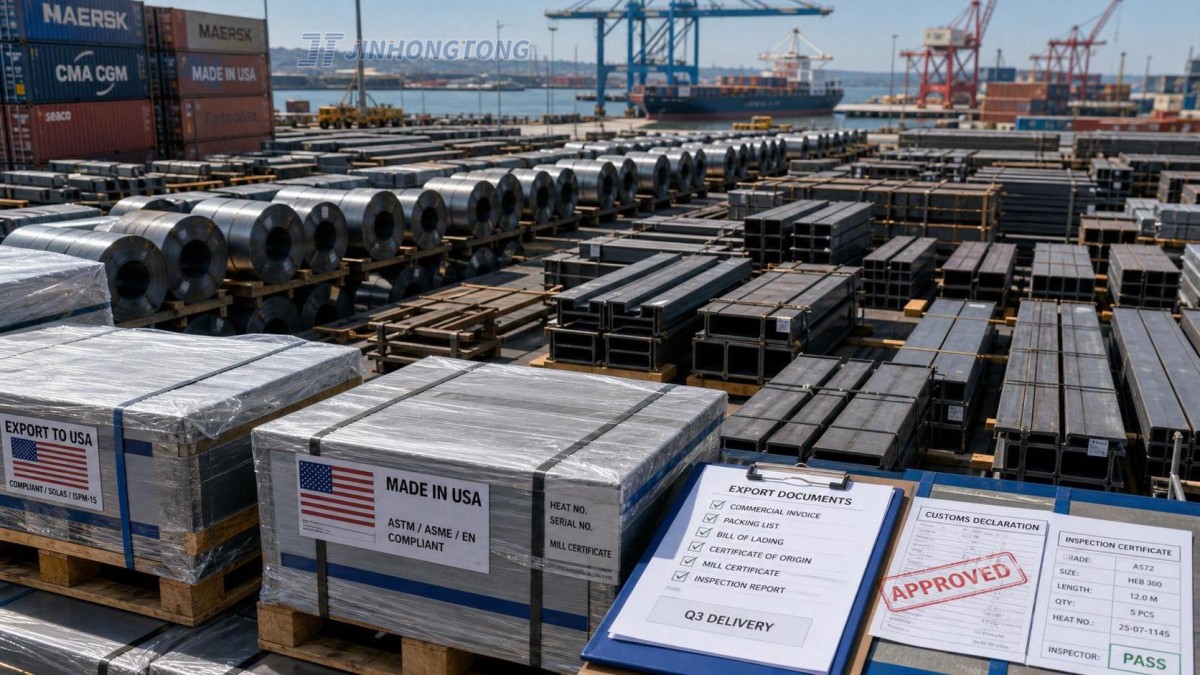
For importers and customs-facing service providers, the announced August 1 filing requirement raises the importance of document readiness. The need to submit an origin declaration and cost-composition support means clearance files may require tighter internal coordination among sourcing, finance, exporters, and brokers. What deserves closer attention is whether existing shipment files contain enough traceable support to meet the new filing expectation without delaying release.
Processors and downstream manufacturers may see knock-on effects
Companies using hot-rolled inputs or supplying structural steel and downstream processed products into U.S.-linked orders may also be affected, even if they are not the first customs filer. Analysis shows that any change in review status or document burden can move upstream into procurement timing and downstream into delivery commitments. The most relevant business links are order confirmation, supporting product files, and handoff between raw material sourcing and export documentation.
Supply-chain coordinators will need closer shipment sequencing
Freight coordinators, trade compliance teams, and other supply-chain service actors may need to pay closer attention to sequencing between booking, document finalization, and customs submission. Observably, once a new filing requirement is tied to a specific date, even unchanged physical production schedules can face disruption if supporting documents are incomplete or inconsistent at the time of clearance.
What Companies Should Watch in the Near Term
Check whether origin support is presentation-ready
Analysis shows that the immediate issue is not only whether origin can be stated, but whether it can be supported in a form suitable for customs filing. Companies involved in U.S.-bound shipments should review whether their current origin files are complete, internally consistent, and aligned across commercial, logistics, and compliance records.
Review how cost-composition evidence is assembled
The additional requirement referring to cost composition deserves close attention because it may affect how supporting materials are collected and organized. It is more appropriate to understand this as a documentation-readiness question at this stage, not yet as a confirmed final enforcement outcome. Businesses should therefore focus on whether their existing records can support customs-facing explanations without creating gaps between pricing files and shipment documents.
Revisit Q3 delivery promises and contract timing
For shipments planned from Q3 2026, delivery timing may become more sensitive to document preparation and review-related processing steps. From an operational perspective, companies should watch whether promised lead times, shipment windows, and customer acceptance milestones still leave enough room for added clearance requirements starting August 1.
Monitor later wording and execution signals
No detailed implementation guidance beyond the summary has been provided in the input. For that reason, companies should continue to monitor later official wording, practical customs interpretation, and any changes in buyer-side documentation requests. The key point is to avoid treating the current notice as a fully settled operating framework when execution details may still evolve.
How This Development Is Best Understood Now
Observably, this development carries two meanings at once. First, it is already an execution signal because a new customs-filing expectation with a stated August 1 timing has been identified. Second, it remains a rule dynamic that still requires observation because the review itself has been launched, not concluded, and the input does not provide a final result or a fuller enforcement interpretation.
From an industry perspective, that combination matters. It suggests that companies should not wait for a final review outcome before adjusting internal document discipline, yet they also should not assume that every commercial consequence is already fixed. The more rational reading is that compliance preparation is immediate, while broader pricing and trade effects still need to be tracked through subsequent official communication and market response.
A Practical Reading for the Steel Trade
This update is best read as a near-term compliance and transaction-management issue with broader commercial implications for Q3 U.S.-bound steel business. The confirmed facts point to additional customs documentation from August 1 and a review process that may influence pricing strategy, document conformity, and delivery cycles for related exports.
Analysis shows that the most useful takeaway is neither alarm nor passivity. At this stage, the event is better understood as a concrete procedural change accompanied by a still-developing trade review. Companies tied to affected product flows should prepare for tighter document control now, while continuing to watch how the rule is interpreted and applied in practice.
Basis of This Article and What Still Needs Verification
This article is generated from the user-provided news title, event date, and event summary. The information available for writing consists of the stated July 3, 2026 announcement, the launch of the expedited sunset review concerning Chinese-origin HRSS, the August 1 customs-filing requirement for an origin declaration and cost-composition support, and the stated potential impact on Q3 2026 pricing, documentation compliance, and delivery timing.
For events of this type, relevant source categories usually include official notices, releases from regulatory authorities, customs or trade administration information, industry association updates, standards-related materials, and reporting by authoritative media. No specific official source link was provided in the input, so the exact official reference still needs to be verified on an ongoing basis. What also requires continued observation includes later policy detail, practical compliance interpretation, buyer or tender-document changes, industry feedback, and how companies implement the requirement in actual shipments.