

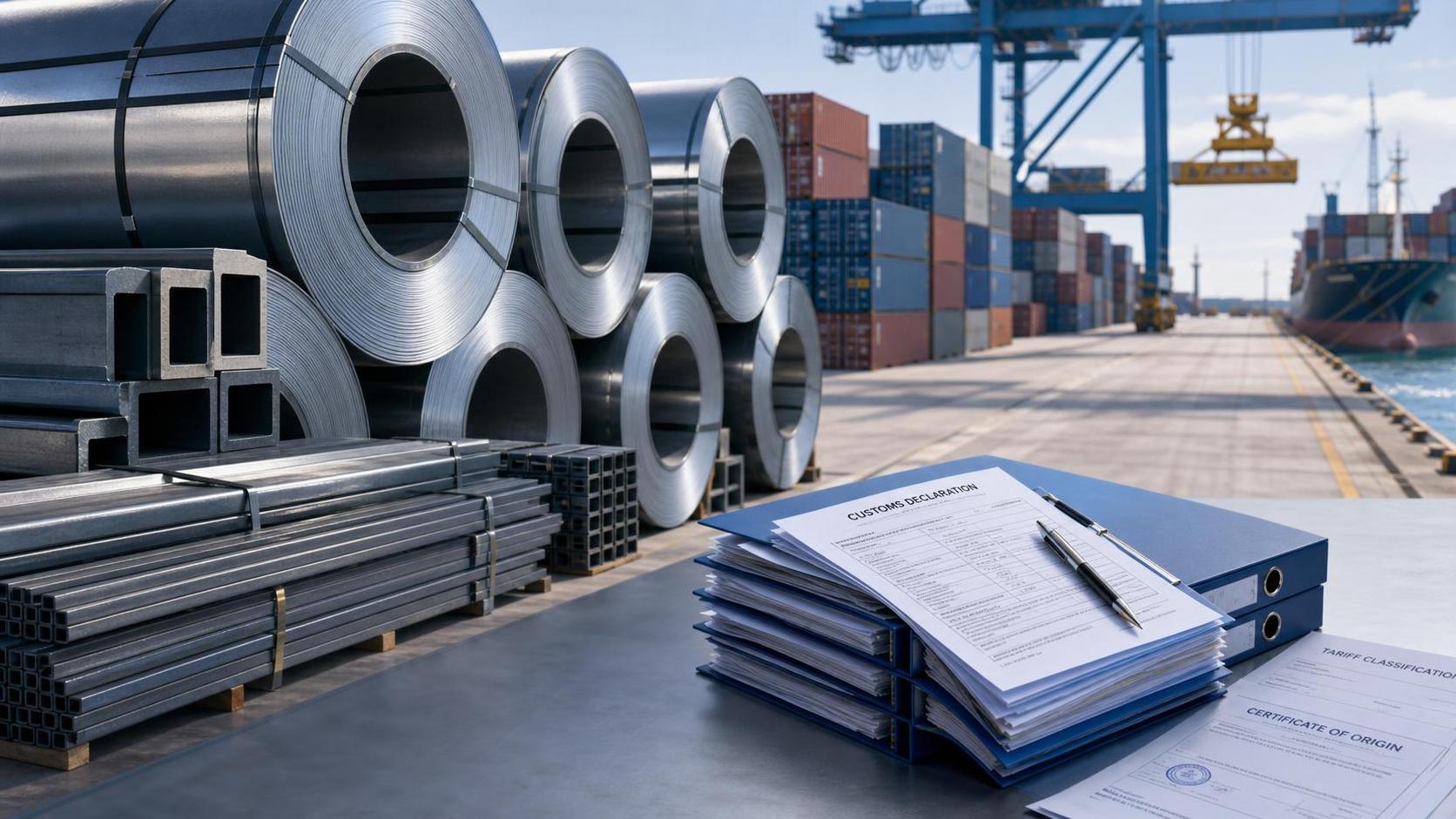
On August 6, 2026, the U.S. Department of Commerce (DOC) announced the start of an annual review of the antidumping (AD) and countervailing duty (CVD) orders covering hot-rolled steel coil (HR Coil) from China. The review applies to export shipments made between April 1, 2025 and March 31, 2026, and it is worth close industry attention because it can affect duty rates applied over the next 12 months, customs documentation expectations, and importer cash deposit arrangements, particularly for commonly used substrate grades such as ASTM A656 and ASTM A1011.
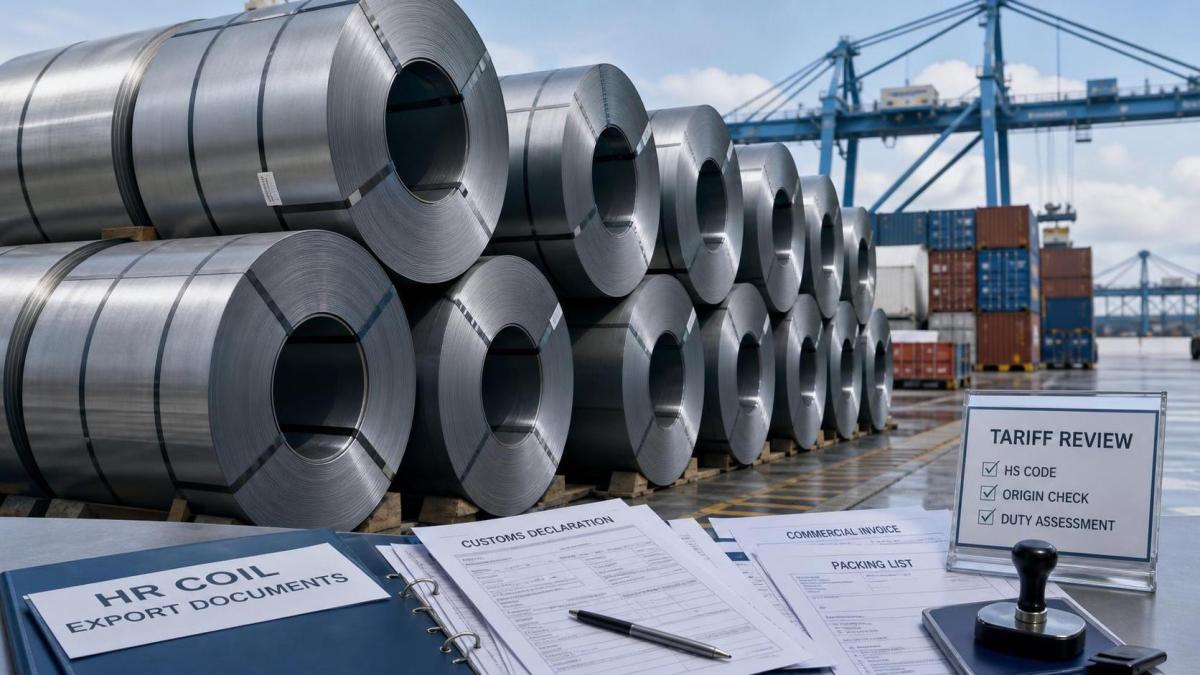
What the DOC has formally initiated
The confirmed development is the formal launch of the DOC’s annual review of both AD and CVD orders on Chinese-origin HR Coil. According to the provided information, the review covers export batches shipped from April 1, 2025 through March 31, 2026. The stated practical effect is that the review will directly influence the duty rate treatment for exporters shipping to the United States during the coming 12 months, as well as customs clearance document requirements and the standard for importer deposit payments. The scope highlighted in the input also points to mainstream substrate applications involving ASTM A656 and ASTM A1011.
Where the immediate pressure points may appear
Exporters facing rate and record exposure
From an industry perspective, Chinese exporters of HR Coil are likely to be affected first because the review is tied directly to duty rate application. The business impact may show up in documentation readiness, shipment traceability, and the ability to support reported export data with a consistent cost structure. What deserves closer attention is whether records for the covered period are complete and aligned with shipment history.
Overseas importers dealing with customs and deposit requirements
Overseas importers may face pressure on the U.S. entry side because the review is explicitly linked to future customs paperwork and importer deposit standards. In practical terms, this can affect clearance preparation, internal compliance review, and coordination with suppliers before entry filings. The provided information also makes clear that importers should begin working with Chinese suppliers in advance to obtain full export records and cost composition support.
Buyers of mainstream substrate grades
Companies purchasing material tied to ASTM A656 and ASTM A1011 should monitor the review closely because those grades are specifically mentioned in the input. The likely area of attention is not only material sourcing, but also the continuity of supporting documents tied to the imported substrate. For procurement teams, the issue is less about broad market interpretation and more about whether each shipment can be backed by complete and consistent transaction records.
Supply chain and trade service providers in the middle
Service providers involved in customs handling, trade documentation, and shipment coordination may also be affected because the review can raise the standard for document accuracy and timing. Analysis shows that these participants may need to spend more effort on matching exporter records, product descriptions, and cost-related files across the covered shipment window.
Operational priorities for companies now
Track official wording and procedural updates
Companies involved in U.S.-bound HR Coil trade should pay close attention to how the review is described in subsequent official communications. Analysis shows that the difference between a review being initiated and a later outcome being determined matters in practice, especially for internal planning, customer communication, and document preparation.
Prepare shipment and cost records early
The provided information already points to a concrete task: overseas importers should coordinate with Chinese suppliers to prepare complete export records and proof of cost composition. This deserves priority because the review period is clearly defined, and delayed collection of records can complicate customs or audit-related responses later.
Focus on the covered product applications
Businesses handling substrate used for ASTM A656 and ASTM A1011 applications should check whether internal product mapping, sales documentation, and shipment records are organized in a way that matches the reviewed trade flows. The practical concern is not a general policy discussion, but whether covered business can be supported with clean and retrievable documentation.
Keep customer and supplier communication specific
Observably, one of the most immediate business tasks is communication discipline. Importers, exporters, and downstream buyers should avoid relying on broad assumptions and instead confirm the covered shipment period, the document set needed, and the timing for providing supporting records. This is especially relevant where customs clearance and deposit arrangements may be affected over the next 12 months.
Why this should be read as a procedural signal, not a final outcome
Analysis shows that this development is best understood as the formal opening of a review with near-term operational consequences, rather than as a final result in itself. The confirmed facts establish that duty rate treatment, customs documentation, and importer deposit requirements may be affected, but they do not by themselves establish the final direction of those outcomes. For the industry, the key point is that review initiation already creates a need for evidence preparation and closer supplier-importer coordination.
It is more appropriate to understand this as a development that combines short-term compliance pressure with ongoing policy observation. In other words, the procedural step is real and immediate, while the full business effect still requires continued tracking.
What this means for the market at this stage
At this stage, the announcement matters less as a broad market narrative and more as a concrete trade administration event affecting exporters, importers, buyers of covered substrate grades, and supply chain intermediaries tied to U.S.-bound HR Coil. The most balanced reading is that the review has immediate documentation and duty-related implications, while its longer-term commercial impact should be assessed only as further official developments become available.
Basis of this article and what still needs verification
This article is based on the user-provided news title, event date, and event summary concerning the DOC’s August 6, 2026 initiation of an annual AD and CVD review on Chinese HR Coil. For this type of development, commonly relevant source categories may include official government notices, company disclosures, industry association updates, authoritative media coverage, and standard-related documents. No specific official source link was provided in the input, so the exact source text and any later procedural updates still need ongoing verification. Continued attention should be placed on subsequent official wording, document requirements, and any later clarification affecting duty rate application, customs clearance practice, and importer deposit standards.