

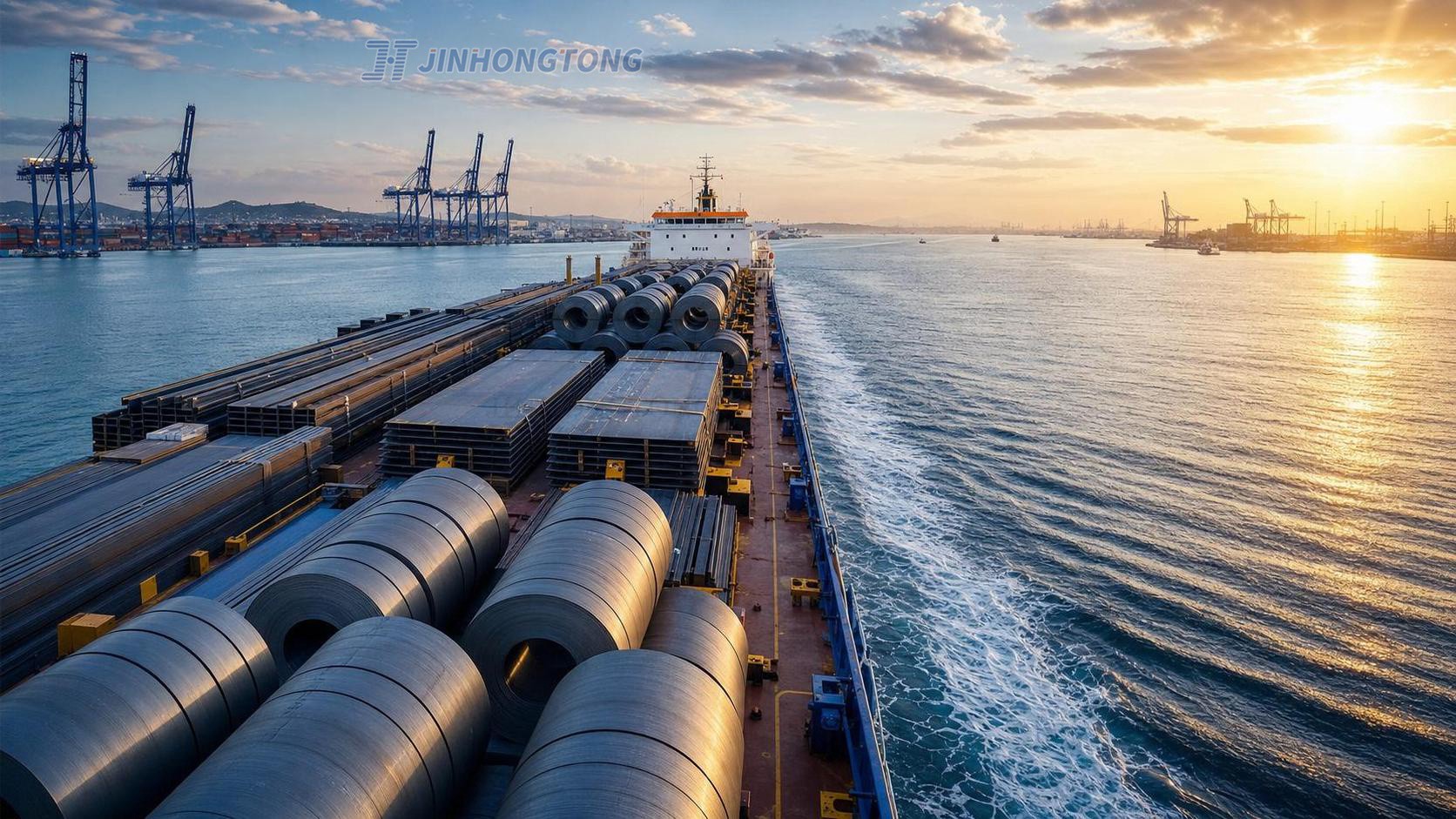
On June 19, 2026, the Strait of Hormuz fully reopened to navigation after a June 14 agreement between the United States and Iran, bringing immediate attention to steel exporters, buyers, logistics providers, and downstream users tied to Middle East trade. For China’s steel shipments to the region, the reopening matters because it directly improves delivery reliability, is expected to pull freight costs down from the elevated levels seen during the disruption, and may help release delayed cargoes that had been held up in Oman and India.
What has been confirmed so far
The confirmed timeline is clear: an agreement was reached on June 14, 2026, and full navigation through the Strait of Hormuz resumed on June 19, 2026. During the earlier disruption, freight rates on Middle East routes had surged, with hot-rolled coil shipments to Fujairah reaching about USD 70-90 per ton. With the route reopened, those freight levels are expected to retreat quickly.
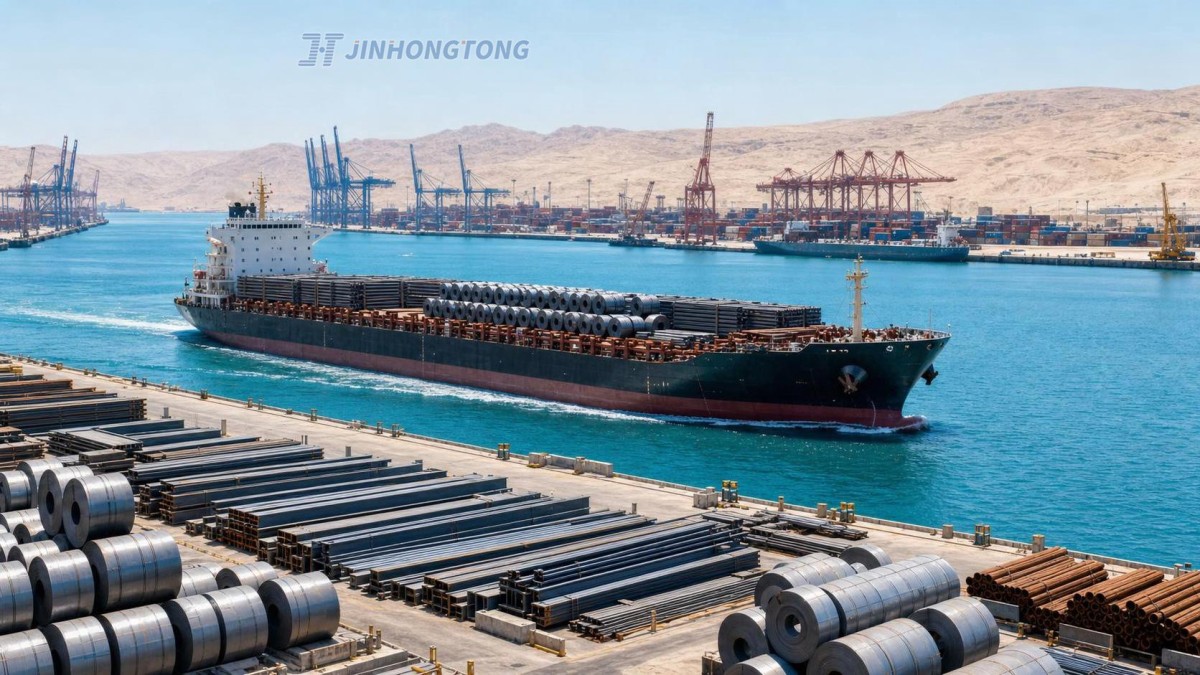
The reopening also affects cargo already in the system. Backlogged orders stranded in Oman and India are expected to move forward more quickly. In trade structure terms, the route is highly relevant for Chinese steel exporters because 14% of China’s steel exports in 2025 went to the Middle East, while Saudi Arabia and the UAE together imported more than 11 million tons. The direct confirmed effects identified in the input are better delivery stability, lower landed costs, and improved room for procurement margins.
Where the impact appears first in the steel trade chain
Exporters regain room on delivery and pricing
From an industry perspective, direct steel exporters are likely to feel the first operational change because freight is a visible component of delivered pricing and shipment planning. The main impact is on quotation structure, shipment scheduling, and contract execution. What deserves closer attention is whether lower freight is passed through immediately into offers or used first to stabilize delivery commitments on delayed business.
Buyers in key Gulf markets may see procurement conditions improve
For buyers in Saudi Arabia, the UAE, and other Middle East destinations, the reopening matters mainly through landed cost and delivery predictability. Analysis shows that even before any broader market adjustment, restored transit can improve purchasing decisions by reducing uncertainty around arrival timing. Buyers will need to watch how quickly freight corrections are reflected in supplier offers and whether delayed cargoes clear in sequence or create short-term timing imbalances.
Logistics and supply chain service providers face a reset phase
Shipping, forwarding, and related supply chain service providers are affected because the event changes route economics and execution priorities. The immediate business focus is likely to shift from disruption handling to backlog clearing, vessel planning, and schedule normalization. Observably, the key variable is not only lower cost but also how smoothly accumulated cargo in Oman and India returns to regular delivery flow.
Processors and end users gain from better arrival visibility
For processors, distributors, and industrial end users that rely on imported steel, the benefit is less about headline freight alone and more about planning certainty. Improved arrival visibility can support inventory timing, resale arrangements, and production coordination. What deserves closer attention is whether contract timelines and customer commitments need to be recalibrated as delayed shipments begin moving again.
What companies should monitor now
Track the gap between reopening and actual rate adjustments
Analysis shows that the reopening itself and the real pace of freight normalization are not the same thing. Companies should closely compare new freight indications with the elevated levels previously seen on hot-rolled coil shipments to Fujairah and assess how quickly carriers and service providers adjust executable pricing.
Review delayed orders and delivery sequencing
Businesses with cargo linked to Oman or India should recheck shipment status, delivery order, and customer communication plans. The practical issue is not only whether delayed orders can move, but also how quickly they can be absorbed into normal scheduling without creating confusion over priority, arrival windows, or contract performance.
Recalculate landed cost and margin assumptions
For exporters and buyers alike, lower freight can change landed cost calculations and procurement margins. Companies should revisit offers, purchase plans, and destination economics with updated logistics assumptions, while keeping a clear distinction between confirmed transport changes and broader price expectations that are still developing.
Confirm documents, timelines, and counterpart communication
As delivery conditions improve, execution discipline becomes more important. Firms should verify shipment documents, contract timelines, and communication records with customers, suppliers, and logistics partners so that resumed transit translates into smoother fulfillment rather than new disputes over timing or responsibility.
Why this is important, but not yet the whole story
Observably, this development is best understood as a direct logistics reset rather than a complete market conclusion. The confirmed facts support a near-term easing in transport pressure for China’s steel exports to the Middle East, especially through lower freight, better delivery stability, and faster movement of delayed orders. At the same time, Analysis shows that the full commercial effect still depends on how quickly rates normalize in practice and how efficiently the backlog is cleared.
It is more appropriate to understand this as a short-term operational improvement with broader trade significance, rather than as a final indicator for all regional steel demand or pricing conditions. The route has reopened, but the degree to which this translates into sustained margin recovery or procurement expansion still requires observation.
How to read the signal at this stage
For the industry, the clearest meaning of this event is that a major transport bottleneck affecting China-to-Middle East steel trade has eased. That alone can materially improve execution conditions for exporters, buyers, and logistics operators working on Gulf-related business. A neutral reading, however, is still necessary: the reopening changes delivery and cost conditions first, while wider commercial outcomes should be judged only after freight adjustments and backlog clearance become visible in actual transactions.
Basis of this article and what still needs verification
This article is generated based on the user-provided news title, event date, and event summary. For this type of industry development, commonly relevant source categories may include official announcements, corporate statements, industry association updates, authoritative media coverage, and trade or shipping-related notices. No specific official source link was provided in the input, so the exact official documentation still requires follow-up verification. Continued attention should be paid to any further official wording, the practical pace of freight normalization, and the delivery progress of previously delayed orders.