

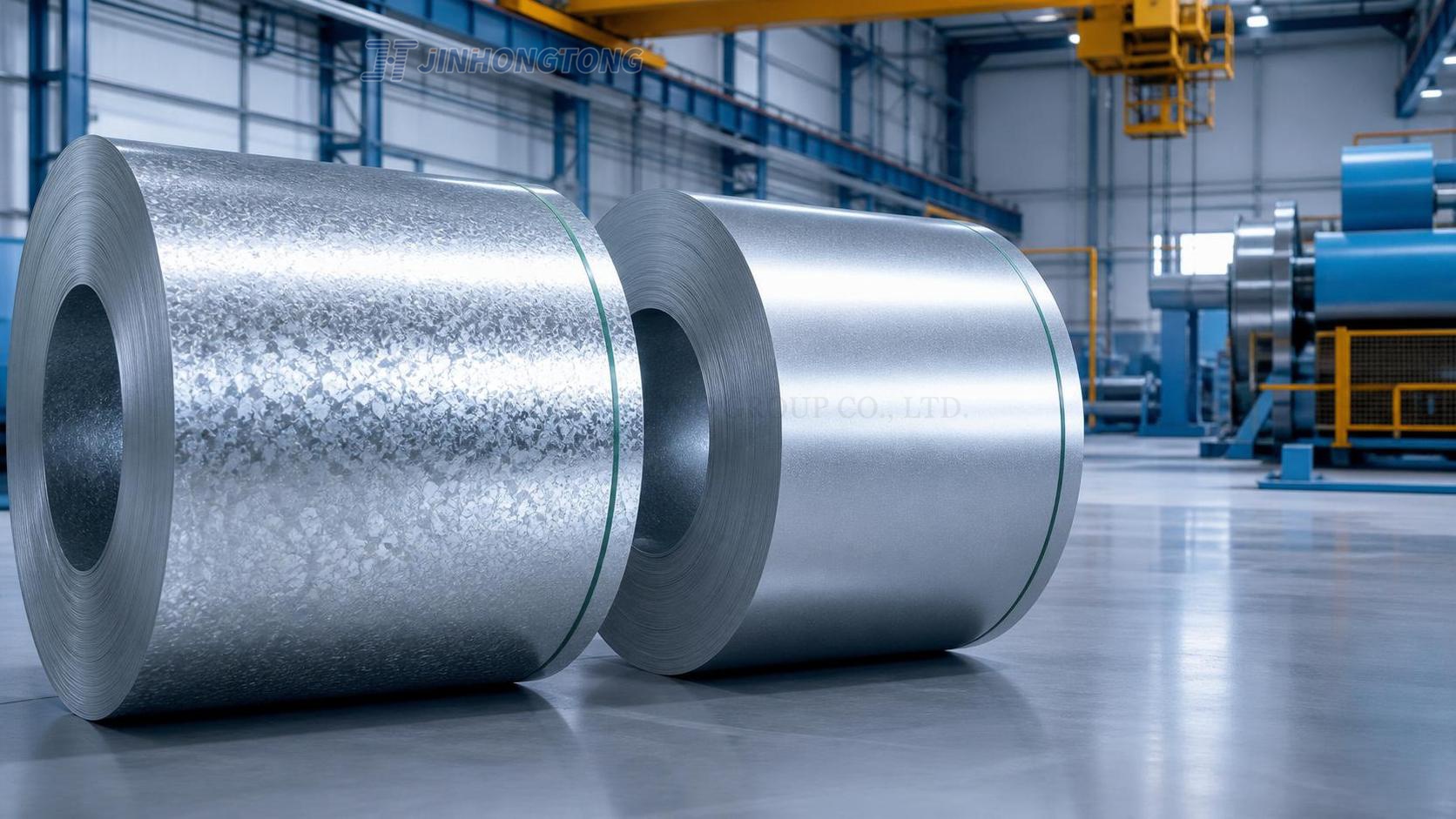
When comparing hot dip vs cold rolled galvanized coil, the difference goes far beyond appearance. From coating process and corrosion resistance to surface finish and cost, each option serves different industrial needs. In this guide, we will break down their key characteristics, applications, and performance advantages to help you choose the right galvanized coil for your project.
What does hot dip vs cold rolled galvanized coil really mean?
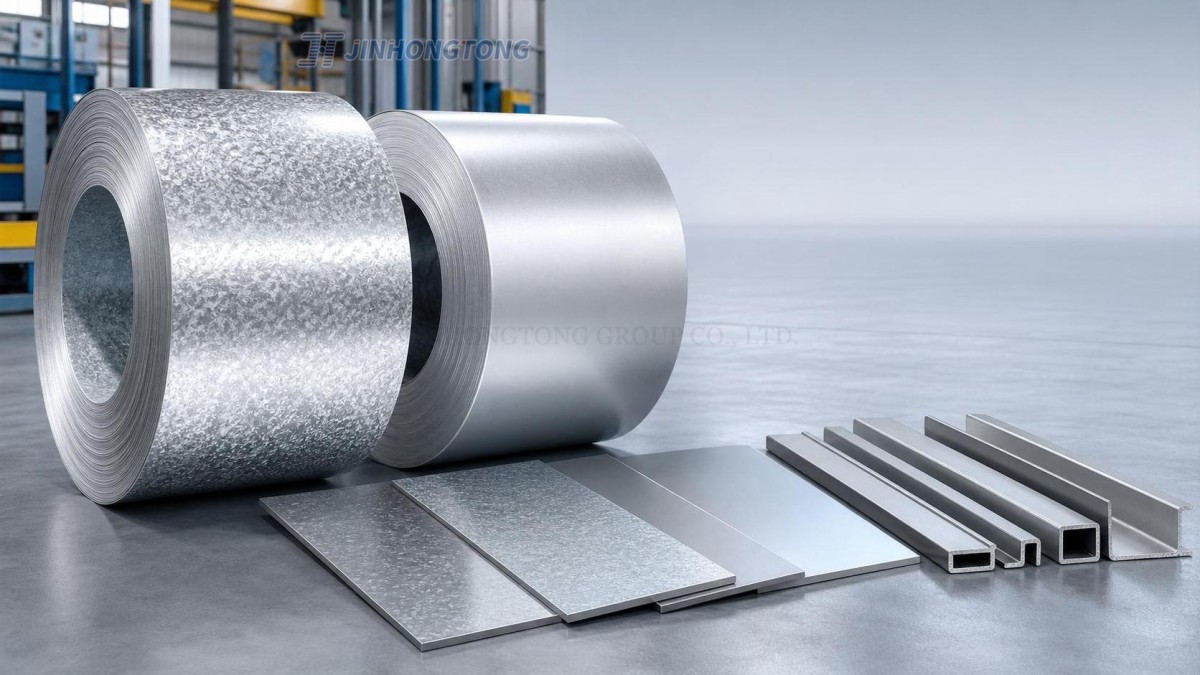
In steel and section procurement, many buyers use the phrase hot dip vs cold rolled galvanized coil as if it describes two coating methods only. In practice, the comparison usually covers both substrate route and zinc coating behavior.
Hot-dip galvanized coil is produced by passing steel strip through a molten zinc bath. The zinc layer forms a metallurgical bond with the steel surface, giving strong corrosion protection and broad industrial adaptability.
Cold-rolled galvanized coil usually refers to galvanized steel made from a cold-rolled base material. The cold-rolled substrate offers tighter thickness tolerance, flatter surface, and a cleaner finish before galvanizing or further coating.
That is why the real decision is not simply coating versus coating. Buyers must evaluate base metal quality, zinc coating weight, forming demand, surface appearance, downstream processing, and target service life.
- If your priority is outdoor durability, zinc layer thickness and corrosion class usually matter more than gloss.
- If your priority is appliance panels or visible parts, surface uniformity, waviness control, and paint adhesion become more critical.
- If your budget is tight, you need to compare lifecycle cost rather than purchase price alone.
Why the terminology often causes confusion
Some buyers compare hot-dip galvanized coil with bare cold-rolled coil. Others compare hot-dip galvanized products made from cold-rolled substrate against general galvanized sheet. This creates errors in quotation, specification review, and application matching.
A better approach is to define the material through four points: substrate grade, thickness, zinc coating mass, and intended use. Once these are clear, the hot dip vs cold rolled galvanized coil decision becomes much more practical.
Key differences buyers should compare before placing an order
The table below summarizes the most important hot dip vs cold rolled galvanized coil differences for purchasing, fabrication, and long-term use. It is especially useful when several departments are involved in technical approval.
This comparison shows that the right answer depends less on which product sounds better and more on the working environment, forming route, and finish expectations. In galvanized coil purchasing, the cheapest quote often becomes the most expensive mistake.
The most overlooked decision factors
- Coating mass such as common zinc designations has direct impact on outdoor lifespan and replacement cycle.
- Oil passivation, chromate-free treatment, and storage conditions affect white rust risk during shipping.
- Bending radius and stamping depth matter if the coil will be profiled, punched, or deep drawn.
- Final coating systems such as painting or lamination require specific surface cleanliness and adhesion behavior.
Which applications are better suited to each galvanized coil option?
Application fit is where the hot dip vs cold rolled galvanized coil choice becomes clear. In steel and section projects, performance failure usually comes from mismatch between product characteristics and real service conditions.
Scenarios where hot-dip galvanized coil is often preferred
Hot-dip galvanized coil is commonly selected for outdoor or semi-exposed use where corrosion protection is a major concern. It performs well in construction support systems, roofing accessories, agricultural structures, and HVAC fabrication.
- Building components exposed to rain, condensation, or temperature cycling
- Roll-formed profiles such as channels, studs, ceiling systems, and light framing members
- Cable trays, ventilation ducts, guard components, and general industrial sheet metal parts
Scenarios where cold-rolled galvanized coil is often preferred
Cold-rolled galvanized coil is usually favored when the finished part must look clean, uniform, and dimensionally stable. This makes it a practical choice for visible casings, office equipment, and painted interior products.
- Appliance shells, electrical cabinets, and machine covers with stricter surface requirements
- Light-gauge formed parts where consistent flatness improves automated fabrication
- Prepainted or powder-coated products where substrate smoothness affects final appearance
For many buyers, the practical question is not which one is superior overall. The better question is this: will the product be judged more by outdoor life, by appearance, or by forming precision?
How do technical performance and coating details affect service life?
When discussing hot dip vs cold rolled galvanized coil, service life is heavily influenced by technical details that are often missing from initial inquiries. A clear specification reduces disputes later in production and installation.
The following table highlights the technical parameters buyers should confirm before finalizing galvanized coil selection, especially for projects with fabrication, coating, or export requirements.
For most projects, corrosion resistance depends on a system, not one factor. The substrate, zinc mass, cutting edge exposure, installation environment, and storage discipline all influence the final outcome.
Common technical risks during use
- Ordering low coating mass for outdoor use and expecting long service life.
- Ignoring edge protection when the sheet will be slit into narrow strips.
- Stacking coils in humid storage, causing white rust before production begins.
- Using a surface finish intended for general fabrication in high-visibility painted parts.
How should you choose hot dip vs cold rolled galvanized coil for procurement?
Procurement teams often face the same problems: unclear selection standards, multiple price levels, urgent delivery, and uncertainty about whether the quoted coil really matches production needs. A structured buying process can avoid rework and claim costs.
A practical selection checklist
- Define the end use first: indoor equipment, outdoor structure, painted panel, or roll-formed profile.
- Confirm thickness, width, and coil weight based on your production line, not only on market availability.
- Specify coating mass clearly instead of using vague terms like standard zinc or export quality.
- Ask whether the material needs minimized spangle, oiling, passivation, or paint-ready finish.
- Check packaging, moisture protection, and lead time if the shipment will move by sea or stay in storage.
When price comparison becomes misleading
In hot dip vs cold rolled galvanized coil sourcing, two offers can look similar but represent different value. One may have lower zinc coating, looser tolerance, or lighter packaging. The unit price seems attractive, yet production loss and corrosion risk increase later.
A useful comparison should include grade, thickness tolerance, coating weight, finish, surface treatment, coil weight, and delivery condition. Without these items, price evaluation is incomplete.
Cost, alternatives, and lifecycle value
Cost decisions in steel and section purchasing should consider more than purchase price per ton. The right galvanized coil can reduce paint failure, scrap rate, maintenance frequency, and replacement cost over the life of the project.
Where hot-dip galvanized coil usually creates value
If the project faces weather exposure, occasional water contact, or moderate industrial atmosphere, hot-dip galvanized coil often delivers better lifecycle economy. A thicker zinc layer can delay corrosion and reduce the need for corrective maintenance.
Where cold-rolled galvanized coil justifies added cost
If appearance affects sales value or product acceptance, smoother cold-rolled galvanized coil can lower repainting, polishing, or reject rates. That matters in appliances, electrical housings, and finished visible components.
Possible alternatives to review
- Prepainted galvanized steel when decorative finish and added barrier protection are both needed.
- Galvalume or aluminum-zinc coated steel for specific roofing and heat-reflective applications.
- Bare cold-rolled coil only for indoor dry conditions where corrosion protection is not required.
What standards and compliance points should you confirm?
Galvanized coil procurement becomes more reliable when specifications refer to recognized standards. Exact standards depend on destination market and industry, but buyers should always align orders with general requirements for coating mass, mechanical properties, and dimensional tolerance.
- Confirm whether the project follows ASTM, EN, JIS, or another commonly accepted standard family.
- Verify test certificate needs before production, especially for export, public works, or audited supply chains.
- Check whether chemical restrictions or surface treatment limits apply to the destination market.
This step is important when comparing hot dip vs cold rolled galvanized coil from different mills. Even if both products are called galvanized coil, compliance details may vary in ways that affect acceptance.
FAQ: common questions about hot dip vs cold rolled galvanized coil
Is hot-dip galvanized coil always better for corrosion resistance?
Not always by default, but often in practice when it carries a higher zinc coating mass suited for exposed service. Corrosion resistance should be judged by coating specification and environment, not by product name alone.
Is cold-rolled galvanized coil only for indoor use?
No. It can be used in many settings, including coated or semi-exposed products, as long as the coating and fabrication route are suitable. The key reason to choose it is usually surface quality and dimensional consistency.
What should I prioritize if my budget is limited?
Start with the minimum acceptable service life and forming requirement. Do not reduce coating mass or substrate quality below the actual use condition. Saving a small amount on coil can create large losses through corrosion, rejects, or warranty issues.
What information should I send when asking for a quotation?
Provide application, thickness, width, steel grade, zinc coating mass, surface finish, coil weight, order quantity, destination port, and any certification or packaging requirement. This makes hot dip vs cold rolled galvanized coil recommendations more accurate and faster.
Why choose us for galvanized coil selection and supply support?
If you are still evaluating hot dip vs cold rolled galvanized coil, we can help turn a vague inquiry into a workable purchase specification. This is especially valuable when your team must balance budget, appearance, corrosion resistance, and delivery timing.
You can contact us for practical support on parameter confirmation, coil grade matching, zinc coating selection, surface finish recommendations, export packing options, and delivery schedule planning. If your application is not standard, we can also discuss custom width, slitting needs, and fabrication-oriented suggestions.
To speed up quotation and selection, send your required thickness, width, coating expectation, end use, quantity, and target market. We can then help you compare alternatives, reduce procurement risk, and choose the galvanized coil solution that fits your project rather than forcing the project to fit a generic stock item.