


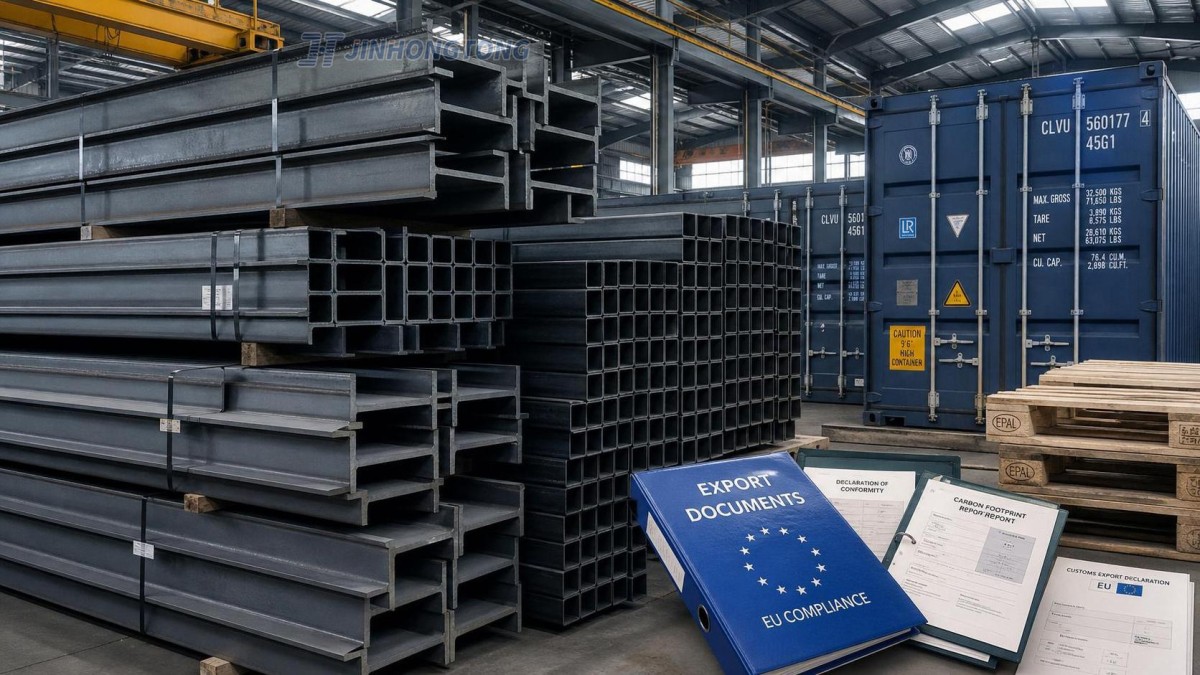
On July 4, 2026, the European Commission released a transitional implementation rule for CBAM steel products that clearly brings mainstream structural sections, including hot-rolled H-beams and cold-formed rectangular tubes, into the regulatory scope. From October 1, 2026, exporters shipping these products to the EU will need to submit carbon emissions data and arrange third-party verification. For companies involved in profile exports, customs documentation, pricing, contract management, and delivery planning, this is a rule change with immediate practical relevance rather than a distant policy discussion.
What the New Transitional Rule Confirms
The confirmed information is limited but material. The European Commission issued the "CBAM Implementing Rules for Steel Products (Transitional Version)" on July 4, 2026. The rule explicitly includes major structural profile products such as hot-rolled H-beams and cold-formed rectangular tubes within CBAM supervision. It also sets a requirement effective October 1, 2026 for exporters of these profiles to the EU to provide carbon emissions declarations and third-party verification. According to the provided event summary, this directly affects customs clearance file preparation, cost accounting, and contract clause revisions for Chinese profile exporters.
Where the Operational Pressure Is Likely to Appear
Export-facing profile manufacturers and traders
These companies are the most directly exposed because the rule now clearly attaches emissions reporting and verification requirements to covered profile exports into the EU market. The effect is likely to concentrate in shipment documentation, transaction preparation, and customer-facing compliance responses. What deserves closer attention is whether existing export files, product dossiers, and order workflows can support the new declaration and verification steps without delaying shipment execution.
Teams handling customs and delivery coordination
For businesses already serving EU-bound orders, customs preparation and delivery coordination may face tighter procedural demands. The confirmed fact is that the rule affects clearance documentation. Analysis shows that this makes document completeness, timing alignment, and consistency between commercial papers and emissions-related submissions more important in the export process, even though the detailed operational format was not provided in the input.
Buyers and contract management functions
The event summary expressly notes an impact on customer contract clause revisions. From an industry perspective, this means procurement teams, sales managers, and legal or contract staff may need to revisit how compliance obligations, data provision responsibilities, and verification-related risks are addressed in ongoing and new transactions. This should be understood as a practical contract management issue tied to rule implementation, not only as a reporting matter.
Third-party verification and compliance support providers
The requirement for third-party verification creates a direct link between exporters and external assurance or compliance service providers. Observably, the immediate relevance for this group lies in supporting documentary readiness and verification workflows. The input does not provide execution criteria or approved verification pathways, so any further conclusion on market practice would remain premature.
What Companies Should Review Before October
Check whether covered products are already in active EU export programs
Companies shipping hot-rolled H-beams, cold-formed rectangular tubes, or similar structural sections should first confirm where these products sit in their current EU order book and shipment schedule. Analysis shows that the practical issue is not only product scope recognition, but also whether internal teams have already linked those products to emissions-related reporting responsibilities.
Reassess document readiness for clearance and customer submission
Because the event summary identifies customs file preparation as a direct impact point, exporters should pay close attention to the condition of technical files, shipment paperwork, and compliance records that may need to align with emissions declarations and third-party verification outputs. The input does not specify the exact required forms, so this remains an area that needs continued confirmation rather than assumption.
Review pricing logic and contract clauses
The stated effect on cost accounting and contract revision suggests that companies may need to reexamine how compliance-related costs are reflected in quotations, order terms, and customer negotiations. It is more appropriate to understand this as a commercial execution issue emerging from the rule change, especially where delivery commitments and documentary responsibilities are allocated between supplier and buyer.
Track further official wording and implementation practice
The rule establishes a clear implementation direction, but the input does not include detailed enforcement language, document templates, or procedural guidance. What deserves closer attention is how official wording, customer requirements, and transaction documents evolve as the October 1, 2026 effective date approaches. This is especially relevant for companies that depend on repeat shipments and fixed delivery windows.
Why This Looks Like an Execution Signal
Analysis shows that this development is better understood as an execution signal rather than a broad policy headline. The reason is straightforward: the rule does not merely discuss CBAM in general terms, but identifies covered steel profile categories and links them to a dated obligation for emissions declaration and third-party verification. At the same time, it should not yet be treated as a fully settled operating framework in every detail, because the provided information does not include complete implementation mechanics. The near-term task for the industry is therefore to distinguish between what is already confirmed and what still requires verification through subsequent official interpretation and market practice.
How the Market May Need to Read This Update
In practical terms, this update signals that CBAM-related compliance is moving closer to day-to-day execution for steel section exporters serving the EU. The direct pressure points identified in the provided information are documentation, cost allocation, and contract language. A neutral reading is that the rule already matters for transaction preparation, but its full operational impact still depends on how implementation details, customer requirements, and verification practice develop. For now, it is more appropriate to read this as a confirmed compliance expansion with follow-through steps that still need close observation.
Basis of This Article and What Still Needs Verification
This article is generated from the user-provided news title, event date, and event summary. For developments of this kind, commonly relevant source types may include official notices, publications from regulatory authorities, customs or trade administration information, industry association materials, standards documents, and reporting by established professional media. No specific official source link was provided in the input, so the exact official publication path still needs to be verified on an ongoing basis. Continued attention should also be given to later policy detail, certification and verification interpretation, changes in tender or contract documents, market feedback, and how affected companies implement the requirement in practice.