

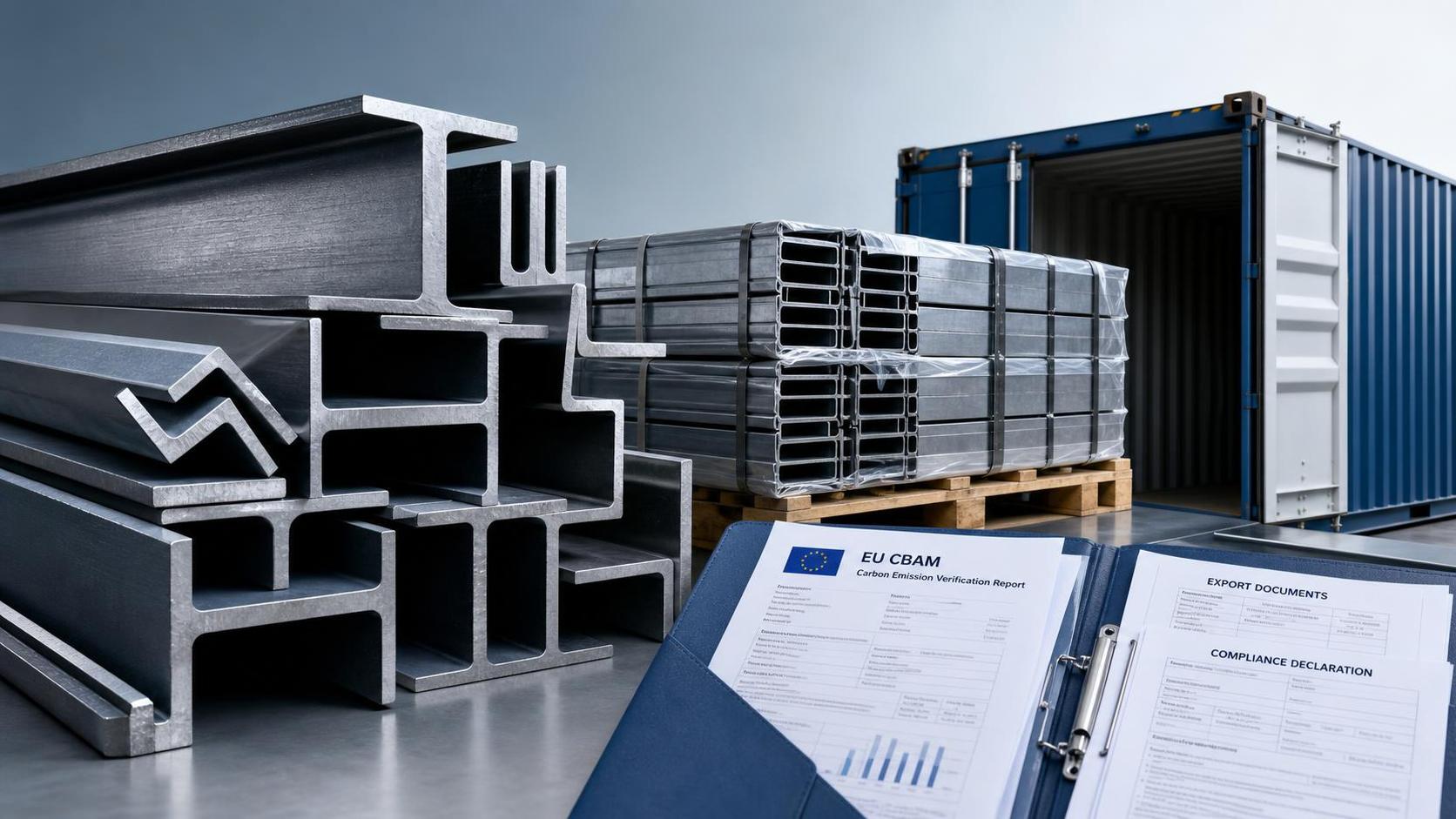
On July 22, 2026, the EU Carbon Border Adjustment Mechanism (CBAM) moved key structural steel sections including hot-rolled sections, H-beams, and angle steel into a third-stage regime of mandatory reporting and prepayment. For Chinese exporters serving the EU market, the immediate issue is no longer only product delivery, but whether each shipment can be supported by embedded carbon data and a third-party verification report through the CBAM transitional registration system. This development deserves close attention from exporters, processors, traders, and supply chain service providers because it directly affects customs clearance, delivery timing, compliance preparation, and cost planning.
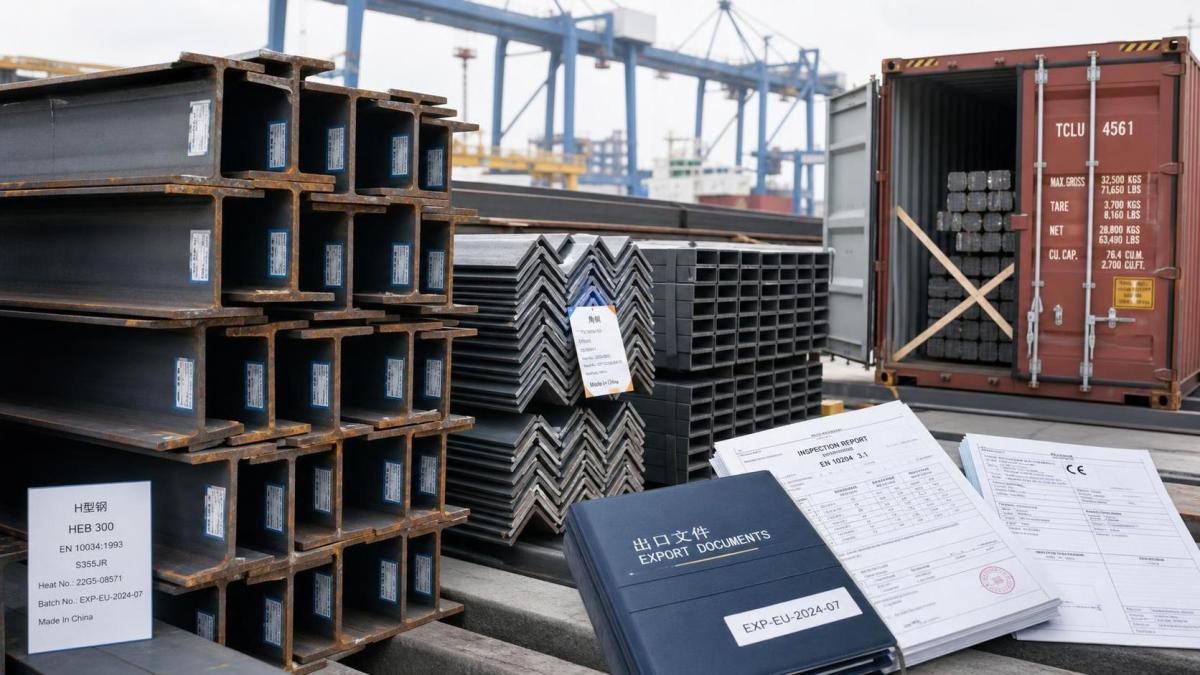
What Has Formally Changed Under CBAM
According to the information provided, from July 22, 2026, the EU formally included major structural steel categories such as hot-rolled sections, H-beams, and angle steel within the third-stage mandatory declaration and prepayment scope of CBAM.
Exporting companies are required to submit the embedded carbon emissions data for each batch of products through the CBAM transitional registration system, together with a third-party verification report.
The information provided also states that non-compliant submission may lead to customs clearance delays or refusal of goods. The adjustment directly affects delivery schedules to Europe, cost structures, and certification preparation processes for Chinese steel exporters.
Where the Pressure Will Appear Across the Trade Chain
Export transactions face a tighter documentation threshold
From an industry perspective, direct exporters are the first group exposed to the change because shipment release is now linked more closely to carbon-related documentation. The main impact is likely to appear in pre-shipment preparation, customs documentation coordination, and customer-facing compliance confirmation. What deserves closer attention is whether batch-level emissions data and verification materials can be assembled in time for each order.
Processing and manufacturing links may see new coordination demands
For processors and manufacturers supplying structural steel products for export, the issue is not only production output but also whether product-related emissions information can be matched to actual shipment batches. Analysis shows that the operational pressure may concentrate on internal record alignment, document handover, and coordination with exporters or customers requesting compliant supporting materials.
Traders and distribution channels may need to reassess delivery commitments
Channel operators and trading firms may be affected because delivery promises to EU customers now depend more directly on compliance readiness. The risk is not limited to administrative filing; it can extend into order scheduling, shipment release, and acceptance at destination. Observably, firms handling multiple suppliers or mixed cargoes may need to pay closer attention to consistency in documentation quality.
Supply chain service providers will be pulled into compliance timing
Logistics coordinators, customs agents, and related service providers may also face operational changes because delays or rejection can emerge when filing is incomplete or not accepted. In practice, the pressure point is likely to be the interface between document readiness and shipping schedules, especially where customers expect fixed delivery windows.
What Companies Should Watch Now
Monitor whether filing practice matches the written requirement
What deserves closer attention is the gap between a formal rule and day-to-day execution. Companies should follow how the CBAM transitional registration system is used in actual transactions and whether there are further clarifications on document standards, review expectations, or filing procedures for covered steel sections.
Identify which product lines and orders are immediately exposed
Businesses with shipments involving hot-rolled sections, H-beams, and angle steel should review which EU-bound orders fall directly into the newly covered scope. Analysis shows that the practical issue is product mapping at the order level, because the requirement applies to each shipment batch rather than to a broad annual declaration.
Prepare verification materials as part of delivery planning
Because third-party verification reports are required, compliance preparation now sits closer to the delivery timeline. Companies should pay attention to whether supporting materials can be completed before shipment milestones, and whether internal teams, suppliers, and external verification parties are aligned on timing.
Strengthen customer and supplier communication around risk points
Observably, this change is also a communication issue. Exporters need to clarify documentation expectations with upstream suppliers and manage delivery and acceptance expectations with EU customers. The distinction between a booked order and a shipment that can actually clear customs becomes more important under this requirement.
Why This Looks Like More Than a Routine Filing Update
Analysis shows that this development is better understood as an operational compliance signal rather than a simple policy headline. The confirmed facts already point to direct consequences for customs clearance, prepayment, and shipment acceptance, which means the issue has moved into execution risk for companies trading covered steel products with the EU.
At the same time, it is more appropriate to understand this as a development that still requires continued observation. The immediate rule is clear in its reporting and verification direction, but the full business effect will depend on how consistently the requirements are applied in transaction practice and how companies adapt their documentation workflows.
How the Market May Read This Stage
For the steel export trade, the practical meaning of this update is that carbon reporting for covered structural sections is becoming a shipment-level business condition rather than a peripheral compliance topic. A neutral reading is that the impact is already concrete for firms shipping into the EU, especially where delivery schedules and document readiness are tightly linked.
Current conditions make it more appropriate to understand this as both a near-term operational change and a longer-term policy signal. In the short term, it affects filing, verification, and customs handling. Over the longer term, it indicates that carbon-related documentation is taking a more central place in EU-facing steel trade execution.
Basis of This Article and Ongoing Verification
This article is based on the user-provided news title, event date, and event summary regarding the July 22, 2026 inclusion of key steel sections in the third-stage CBAM declaration and prepayment scope.
For this type of industry update, commonly relevant source categories may include official notices, company disclosures, industry association updates, authoritative media coverage, and standards-related documents. A specific official source link was not provided in the input, so the exact official publication path still needs continued verification.
Further observation should focus on any later official clarifications, practical filing requirements in the CBAM transitional registration system, and how exporters and supply-chain participants adjust documentation and delivery processes for EU-bound steel shipments.