

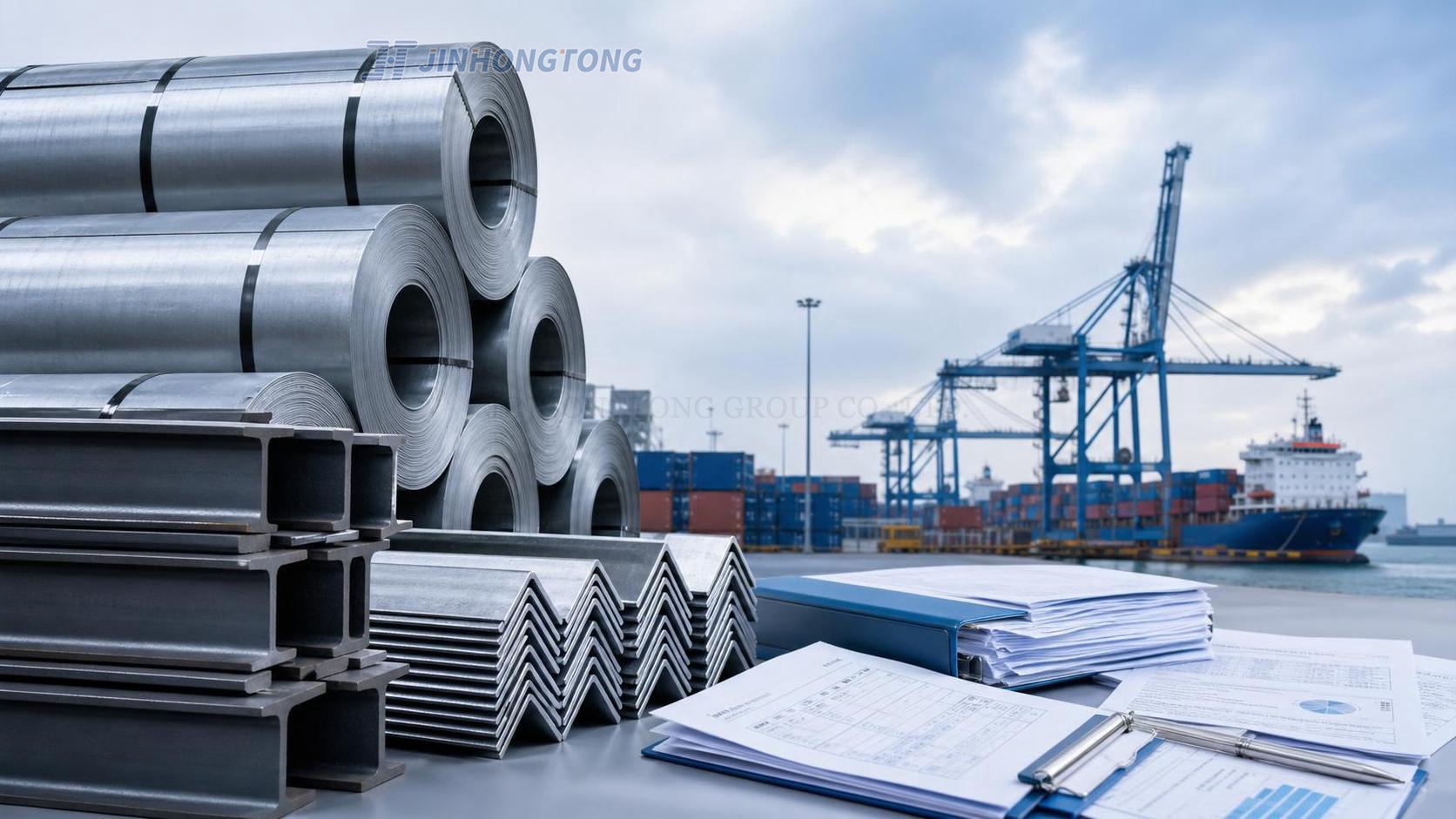
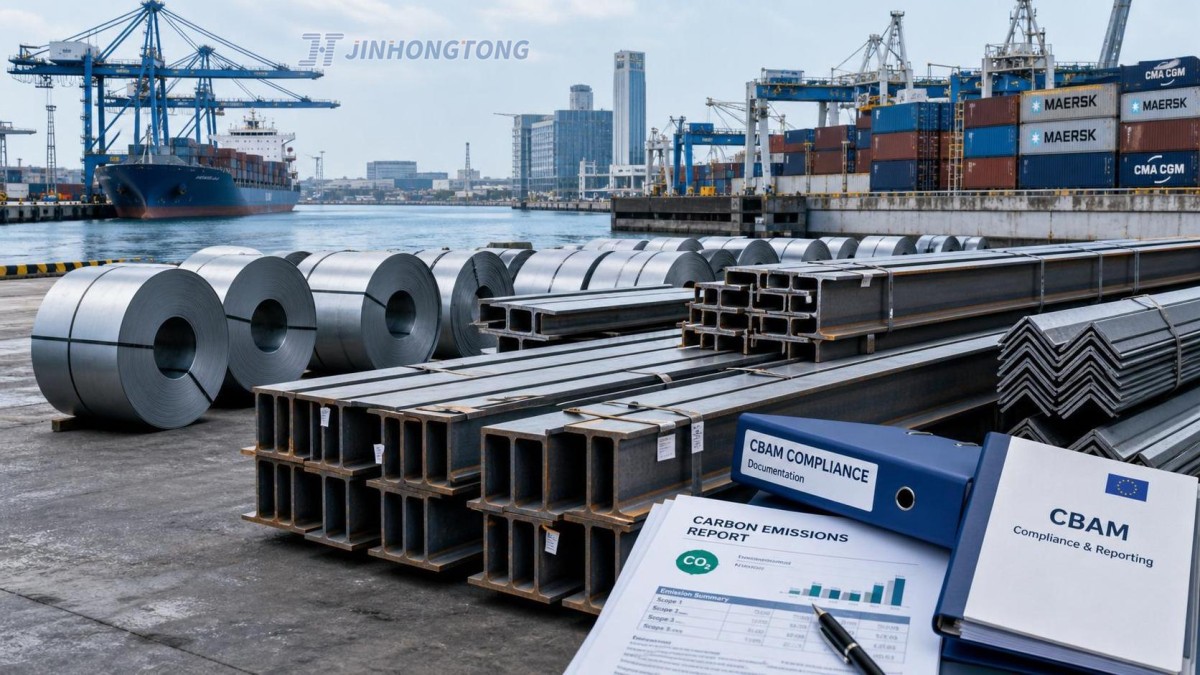
On June 28, 2026, the EU Carbon Border Adjustment Mechanism (CBAM) moved into its first formal charging stage for key China-origin steel exports including hot-rolled coil, H-beams, and angle steel. For importers, this is not just a reporting update but an operational compliance requirement tied directly to customs handling, documentation, and delivery continuity, which makes it immediately relevant for exporters, buyers, traders, and supply chain service providers working with steel shipments into the EU market.
What Has Taken Effect as of June 28
According to the provided event information, from June 28, 2026, CBAM formally started first-stage charging for major export-oriented steel and section products originating in China, including hot-rolled coil, H-beams, and angle steel. Importers are required to submit the actual embedded carbon emissions for the second quarter of 2026, together with a third-party verification report, through the EU CBAM registration system by July 31. The provided information also states that non-compliant filing may result in customs clearance delays, higher port storage costs, and the risk that subsequent batches will be refused.
Where the Immediate Pressure Appears in the Trade Chain
Import-side compliance now affects shipment release
From an industry perspective, importers are the first parties facing direct operational pressure because the filing obligation is tied to the EU CBAM system and a fixed reporting deadline. The main impact is likely to appear in customs preparation, emissions data collection, document matching, and the timing of shipment release. What deserves closer attention is whether import documentation, emissions records, and third-party verification materials are complete and internally consistent before submission.
Exporters and mills face document coordination demands
Analysis shows that exporters of the covered steel products may be affected even where the formal filing obligation sits with the importer. The practical reason is straightforward: importers cannot complete emissions declarations and supporting submissions without upstream product and carbon-related information. For exporting companies and manufacturing suppliers, the likely pressure points are document response speed, data traceability, and the ability to support customers with submission-ready materials within the required timeframe.
Procurement and delivery planning may become more sensitive
Observably, buyers, distributors, and processing companies connected to EU-bound steel flows may also feel the effect through delivery scheduling and order execution. If a shipment faces delayed clearance or added port costs because filing is incomplete or rejected, downstream procurement plans and delivery commitments may come under pressure. In this context, contract timing, handover of compliance documents, and shipment readiness become more important than routine commercial coordination alone.
Service providers may face added review responsibility
Supply chain service providers, including parties involved in documentation and shipment coordination, may need to pay closer attention to whether carbon emissions data and third-party verification materials are available in time for filing. It is more appropriate to understand this as a compliance workflow issue rather than a purely logistics issue, because the consequences described in the event summary extend beyond transport timing into acceptance risk for later batches.
What Companies Should Check Now
Confirm whether covered products are already within the current charging scope
Companies handling hot-rolled coil, H-beams, angle steel, and related export-oriented steel products should first verify whether current shipments fall within the rule change described in the event. The immediate concern is not general policy interpretation but whether a specific batch now requires carbon emissions reporting and third-party verification before the filing deadline.
Review the readiness of emissions data and verification documents
Analysis shows that the most practical compliance question is whether actual embedded carbon emissions data for the second quarter of 2026 can be prepared in a form usable by the importer in the EU CBAM registration system. Since the provided information explicitly mentions a third-party verification report, companies should pay close attention to the completeness, consistency, and handoff timing of those materials. The event summary does not provide further execution detail, so this should be treated as an area requiring careful follow-up rather than assumed operational clarity.
Reassess delivery schedules around the July 31 filing deadline
For businesses with shipments moving close to the reporting deadline, it is worth reviewing whether compliance preparation could affect customs timing, port dwell time, or customer receipt planning. The provided information confirms the risk of clearance delays and higher port-related costs in cases of non-compliant filing, so delivery coordination and deadline management deserve immediate attention.
Track follow-on execution signals rather than assuming uniform practice
Observably, companies should continue monitoring how filing expectations, document review standards, and practical enforcement are expressed in ongoing execution. The event confirms that the charging stage has begun and that reporting is required, but it does not provide a fuller implementation framework. That means businesses should stay alert to further official wording, customer-side document requests, and any changes in tender, procurement, or shipment acceptance requirements.
Why This Matters Beyond a Single Filing Deadline
Analysis shows that this development is more than a one-off reporting reminder. It signals that carbon-related trade compliance for covered steel products has moved closer to day-to-day execution, where customs processing, documentary readiness, and cross-border delivery can be affected directly. At the same time, it is still too early to treat every practical consequence as fully settled, because the provided information does not establish a complete enforcement pattern beyond the stated filing obligation and listed non-compliance risks.
How This Update Is Best Understood
It is more appropriate to understand this update as an implemented compliance signal rather than a policy discussion still at a preliminary stage. The charging phase described in the event has already taken effect, and the reporting deadline creates a near-term operational checkpoint for market participants. From an industry perspective, the immediate significance lies in execution discipline: product coverage, emissions data readiness, third-party verification, and customs-facing document coordination now matter in a more direct way for steel trade into the EU.
Basis of This Article and What Still Needs Verification
This article is based on the user-provided news title, event date, and event summary. For developments of this type, relevant source categories typically include official notices, regulator releases, customs or trade authority information, industry association updates, standard-setting documents, and reporting by established business or industry media. No specific official source link was provided in the input, so the underlying official reference should still be verified on an ongoing basis. Further observation is also needed regarding detailed implementation wording, verification practice, procurement document changes, tender language, industry feedback, and how companies are handling compliance in actual shipments.